
Social Media Reach Is Shrinking. Build an Email List You Control
You don't have a content problem. You have a reach problem.
If you've felt like you need to post more to grow, you're not lazy or behind.
You're reacting to a real shift in how social media distribution works.
Organic reach is getting tighter and more expensive in attention, even if you're not paying in dollars.
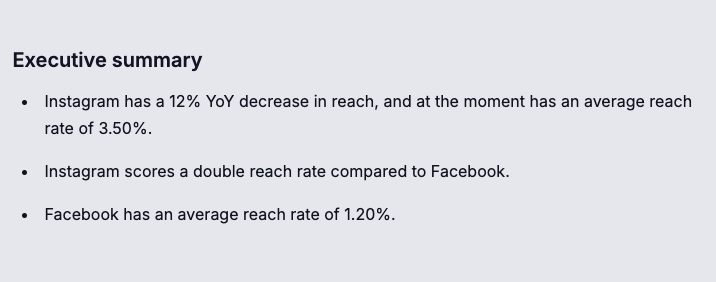
SocialInsider’s 2025 reach research says Instagram’s average reach is down about 12% year over year, and the average reach rate sits around 3.50%. Facebook is even lower, around 1.20%.
So when you publish something thoughtful, something you spent real time on, most of your followers never see it. Not because the content is weak. Not because you’re inconsistent. Because the platform changed the rules.
On social media, you borrow a corner of their room for as long as they decide to let you.
That’s why the goal is not “make more content.”
The question now is if you’ll let platforms keep most of that attention, or if you’ll turn it into something you can actually reach on purpose.
By The Numbers
Let’s put simple numbers on it so the trade is visible.
Say you have 2,000 Instagram followers. A 3.5% reach rate means a typical post reaches about 70 people.
That is the part people avoid saying out loud.
You can plan, script, design, film, caption, and publish all week, feel like you did your part, and the platform quietly hands you 70 sets of eyes. On a good day. If nothing odd is happening with the feed.
If you skip a day or two, the algorithm dials you down again and you start climbing back.
Now compare that to an email list of 2,000.
Campaign Monitor says a good open rate is often in the 17% to 28% range depending on industry.
Even at the low end of 17%, that is 340 opens.
At 28%, that is 560 opens.
Same size audience. Same single piece of content. Same creative effort on your part.
Completely different reach.
And this is before we consider the first email someone ever gets from you.
Welcome emails tend to open far higher than regular broadcasts. Campaign Monitor cites research showing welcome emails can hit extremely high open rates. Hive.co reports Welcome emails have a a 91.43% open rate.
Other benchmark summaries routinely put welcome emails far above normal campaign averages. It is the one moment when someone has just said, “Yes, I want this,” and their attention is at its cleanest.
If you’re not building your email list on purpose, you’re leaving that moment unused.
You’re leaving reach on the table every week.
You’re doing the hard part of earning interest, then handing most of the control back to companies whose priority is not your stability.

Here is the simple comparison you can keep in mind.
On Instagram, SocialInsider puts average reach around 3.50%, and says it is down 12% year over year.
On Facebook, they see average reach around 1.20%.
On email, “good” open rates often land between 17% and 28%, depending on who you serve and how often you send.
Even if you dislike email, the math doesn’t care.
Social is not reliably delivering your message to the people who said they wanted to hear from you.
Email still does.
Do people ignore emails? Of course.
Do promotions tabs exist? Yes.
But the baseline mechanics are different. When you send an email, it is addressed to a specific person and delivered to their personal inbox. The platform doesn’t decide that only 3% of your list gets it today because you didn’hyt post a reel yesterday.
The distribution is direct, not mediated.
You may not love writing emails. You may feel more natural talking to a camera. That’s fine. You can still capture emails from video or audio. The question is not which medium you like creating in. It’s where the relationship can actually be reached.
Right now, for most owners, the relationship lives in rented space.
Imagine how angry you’d be at your mobile carrier, like T-Mobile or Verizon, if calls to friends or family only went through 3% of the time.
Why Email Marketing Works (When The Socialz Do Not)
When you treat email capture as a system, not as a sidebar widget, three things change.
First, your content stops being a one-day event.
Right now, most posts function like live stage theater. They perform once in the feed and then drop into the archive. You get a short window of comments and likes, then the platform moves the crowd to the next thing. When you build in a clear bonus invite and email capture, one strong piece of content becomes an asset that keeps producing subscribers over and over. People can find it tomorrow, next month, or in six months and still step into your world in a structured way.
Second, you get compounding attention.
Social resets. You start back at zero every time you open the app. The algorithm might smile at you or not. Email stacks. Each new subscriber increases the number of people you can reliably reach next time. When you send your next message, you’re not praying for a spike. You’re using a list that has actually grown since the last time you spoke to them.
Third, you get calmer marketing.
You stop needing the algorithm to cooperate in order to have a good month.
Your emotional state is not glued to today’s reach graph. You can plan launches and quiet seasons with more confidence knowing you have a base you can talk to directly. You can reduce the number of platforms you feel obligated to feed just to “stay visible,” because visibility is no longer the only way to create revenue.
Calm is not passive. Calm is controlled.
Email capture is one of the ways you move from reactive visibility to controlled communication.
Email Marketing Doesn’t Work for Everyone

This approach fails for people who insist their opt-in should be “Join my newsletter.”
That’s not an offer.
It also fails if you refuse to build one clear bonus invite per topic.
And it fails if you treat email like a storage closet instead of a relationship.
You don’t enjoy “joining newsletters” as a consumer. You subscribe when something specific feels useful, urgent, or clearly connected to a problem you care about.
Your readers are the same.
You need a specific bonus invite that matches the content someone is consuming right now, in that moment, and helps them apply it fast.
If someone just watched a video about pricing, the invitation should be a pricing checklist, a short pricing calculator, or a one-page guide to raising rates without losing sleep. Not “get my weekly thoughts.”
The bonus invite is not a generic newsletter. It’s a tool, a shortcut, a template, or a map that feels like the obvious next move.
Do This
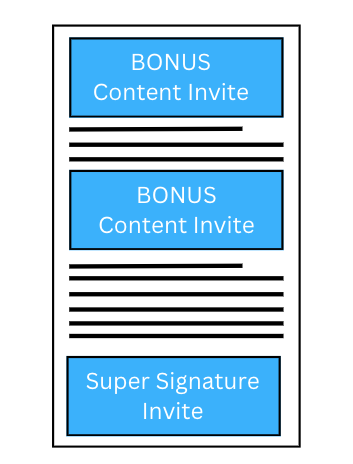
If you do nothing else, do this.
Every piece of content gets one bonus invite that matches the topic. And that bonus invite gets mentioned three times inside the content. Top, middle, bottom.
One piece. One bonus. Repeated on purpose.
That is the whole game: convert discovery into reach.
Email is reach
Social is discovery, when it cooperates.
Email is reach.
Your job is to convert discovery into reach.
Not all at once. Not with a complicated funnel. Simply, steadily, by making sure that every time someone discovers you, there is a clear path to hear from you again without going through the algorithm.
If you only fix that, you change the long-term shape of your marketing.
Email Marketing solves these problems
leads feel random
posting feels endless
launches depend on luck
momentum disappears when you take a day off
you keep rebuilding trust from scratch
Old Way vs New Way
Even though email marketing is old, what’s old is new again.
Old way:
post, hope, repeat
one piece performs once
algorithm decides distribution
New way:
publish, capture, follow up
one piece produces subscribers for months
you decide distribution
3 Ways To Grow Your Email List

1) In-content bonus invites (plus the end bonus, plus the “bonus bonus”)
Your article, video, or podcast should contain the opt-in, naturally, more than once.
Not because you’re desperate, but because people enter and exit at different points. Attention drifts. Someone may arrive halfway through, or scroll quickly, or listen in the car and miss the first mention.
You place the invite at the top, middle, and bottom, then you add an end-of-content bonus invite for finishers.
At the top, you frame it as context:
“Before we get into this, I made a one-page version you can keep.”
In the middle, you frame it as support:
“Quick reminder, if you want the checklist that breaks this it into steps.”
At the bottom, you frame it as continuity:
“If you want to actually use this, grab the template. It will save you from rebuilding it from scratch.”
One piece of content. One bonus invite.
That is how you keep conversion predictable and measurable. You know what each asset is supposed to do.
Start doing this going forward. But for now, review your top blog posts in Google Analytics or Search Console and retroactively add the bonus invites there.
You’re already generating traffic and attention. It’s time to build your audience from the things already working for you.
2) The Macro Wave promotion
This is your social rhythm around the release, not just the day-of post.
Before it drops, you tell people it’s coming and give them a reason to join the list so they don’t miss it.
You’re training a simple expectation: “If I want the good stuff, subscribe.”
You might share a draft screenshot, a behind-the-scenes clip, or a simple statement of the problem you’re solving. Then you say, “If you want the full breakdown and the tool when it goes live, it’ll go to the list first.”
When it drops, your email subscribers get it before anyone else.
That one move matters more than it seems. Over time, it shifts perception. Social becomes the trailer. Email becomes the movie.
People learn that if they wait for the feed, they’re always late. If they’re on the list, they are early.
After it drops, you do a post that triggers response.
You give a clear interaction: “DM me X” or “comment Y if you want the one-page version.”
Then you deliver the bonus invite through email capture, not just a link reply in the DMs.
“Here is the link to get it. It will ask for your email so I can send updates when I improve it.”
You’re not hiding the capture. You’re being clear about the trade.
The Macro Wave is simple:
Pre-frame.
Priority to the list.
Post-release prompt tied to the bonus invite.
You’re no longer hoping one static post does everything.
3) Retargeting to the bonus invite only
Retargeting is the safety net that makes the whole system steady instead of fragile.
You don’t retarget people to “read the blog” or “watch the video again.”
You retarget them to the downloadable bonus. The bonus invite is the conversion point that changes them from borrowed attention to owned relationship.
So anyone who visited the page, watched the video, reached a certain watch time, or engaged with the topic sees a simple reminder that finishes the job:
“Want the one-page version?”
“Want the template behind this?”
“Want the checklist so you don’t have to rewatch this every time?”
That is it.
No long sales letter. No deep funnel.
This is the most controlled paid strategy because you’re not guessing who might care. You’re simply circling back to people who already told you, through their behavior, that they do.
IF YOU WANT 3 AD TEMPLATES YOU CAN USE TO DO THIS…
SIGN UP HERE & AND I’LL SEND A MINI SOP & THE 3 AD TEMPLATES FOR EMAIL GROWTH
BUT…

“BUT I ALREADY HAVE AN OPT-IN.”
Most people do. The problem is placement, relevance, and how alive it is.
A generic opt-in sitting in your footer is not connected to intent. It is background noise. You want the invite to appear right when the reader thinks, “I want this,” or “I don’t want to lose this.”
That means in the content, not just beside it.
It means tuned to the topic, not a catch-all.
It also means refreshed often enough that it still represents your best thinking instead of something you made two years ago and never looked at again.
“I DON’T WANT TO BE PUSHY.”
Then don’t pitch. Invite.
Make it a bonus, not a demand.
You don’t need pop-ups that block the entire screen with countdown timers and urgent language. You don’t need scarcity banners screaming that this free PDF is closing tonight.
You need a simple, honest, relevant next step.
“Here is the checklist I use for this.”
“If you want the one-page version, it is here.”
“If you want the template that sits behind this process, I will send it to you.”
People don’t mind being offered a useful next step.
They mind being ambushed with something unrelated or pressured into a decision they didn’t come to make.
“I DON’T WANT TO RUN ADS.”
You don’t need ads to start. You can build a strong capture system with organic traffic and consistent in-content invites.
But retargeting is worth understanding.
Retargeting is not “run ads to strangers and hope.”
Retargeting is “remind interested people to grab the bonus they already showed you they cared about.”
It is the most controlled form of paid spend because it is aimed at people who already raised their hand with a click, a view, or a visit. You’re not trying to convince the entire internet. You’re following up on unfinished intent.
If your risk tolerance for paid media is low, this is the one kind of ad that still makes sense, because it behaves more like a nudge than a broadcast.
“MY LIST IS TOO SMALL TO MATTER. I’LL EMAIL WHEN MORE PEOPLE JOIN.”
A small list is not a problem. A quiet list is.
Size is relative. Too small to what? List size is a vanity metric until you know two things: who is on the list, and what happens next when they join.
A list of 20 right-fit people who actually open, click, and reply can outperform a list of 5,000 who signed up for a random freebie and forgot you existed. One is a room full of fans with energy. The other is a stadium full of empty seats.
Also, small is an advantage. You can treat people like humans. You can ask questions. You can get replies. You can build real trust.
“I HATE WRITING EMAILS.”
Totally fair. Many business owners I talk to do.
It feels like one more thing you have to keep up with. And if you’re already juggling delivery, sales, and life, writing an email can feel like staring at a blank page that judges you.
Here’s the reality: you don’t hate email. You hate the way people have told you to do it.
You have been sold this idea that every email has to be clever, long, perfectly written, and sent on some rigid schedule. That is a fast way to quit.
A good email is simpler. It is one useful point, one clear story, one clean invite. That’s it.
And if you still don’t want to touch it, you don’t have to.
If you want, I will write them for you. I will pull the angles, structure the series, and write the emails that sound like you (if you want) and lead to the next step — clicks, calls, conversions.

Transformation In Your Marketing
Once you install this, your marketing stops feeling like you’re a street performer performing begging for change from strangers.
Your content becomes the front door.
Email becomes the room where the conversation actually happens.
Social posts are no longer the entire plan. They’re invitations into a place you control.
You stop losing momentum because reach dipped again, or the feed moved on, or your post landed on a day when nobody saw it. You stop waking up wondering whether today’s algorithm setting will decide if you eat well next month.
You still use the Socialz. You still post. You still show up.
You just do it with a calmer spine underneath.
Discovery on rented land.
Relationship in your own house.
That’s the quiet shift.
STILL DON’T WANT TO WRITE YOUR MARKETING EMAILS?
Want more reach without posting more?
If you’re tired of watching good content disappear in the feed, email is the lever.
At IKAY, we help you build and run an email engine that turns attention into conversations and clients.
Learn more about our Email Marketing service here
4 Things You Can Do Now, When You’re Ready…
1) Read the article How Often Should You Send Marketing Emails? The Right Frequency With WLNES Check - Click Here
2) Join the Show Up Newsletter boost your business and balance your life. You'll get actionable tips to leverage content marketing, simplify conversion, and master productivity. Join here for FREE
3) Join The Yacht Club - create a smoother business. Consistently Grow Your Business WITHOUT Complex Funnels, Lead Chasing, or Managing a Team Who Doesn’t Care. Only $11 to start and then $48/month. Cancel anytime.
4) Work with me Privately: If you’ve tried courses, group coaching, or even 1-to-1 programs with no results, you’re not alone. The missing piece is not your effort—it’s the process. And the coaching process can’t be a one size fits all. Work with my 1 to 1 to increase your productivity, your revenue and your peace of mind. Click here